
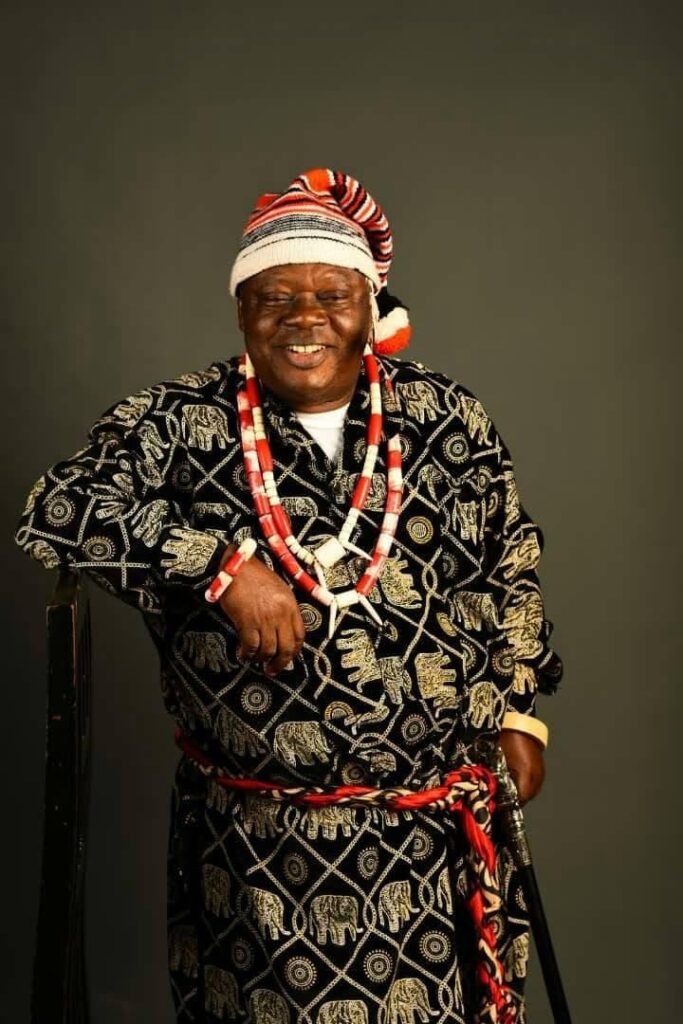
Traditional Governance
The traditional government system in Ohafia generally is a decentralized, participatory democracy akin to a gerontocracy and segmentary lineage system. Power is shared across tiered communal layers from the family (Ikwu) and kindred (Umunna) up to the village assembly, headed by the Ezie Ogo and organized by active age grades (Uke).
Key Organs of Government
- The Family (Ikwu) and Umunna: The foundational political block; family heads and the council of kindred male elders handle domestic disputes, micro-land issues, and internal kinship welfare.
- The Ezie Ogo: The recognized traditional village head or ruler who sits at the peak of individual village administration. He rules in council alongside titled elders and community leaders, serving as the chief custodian of ancestral customs and community peace. HRP ( Engr.) Awa Nwankwo is the Ezie Ogo of Amaekpu Ohafia. Ruling along with members of his cabinet.
- The Village Assembly (Amala): The supreme legislative and decision-making body comprising all adult male citizens of the community where consensus is built on major public policies, laws, and communal direction. []
- The Age Grades (Uke): Organized cohorts of youth and adult men/women who act as the executive arm. They handle infrastructure building, security, sanitation, and enforcement of laws.
- The Udumeze: The paramount traditional throne of Ohafia based in the ancestral capital village of Elu. The Udumeze functions primarily as an appellate and unifying cultural authority, intervening mainly in major disputes between a village Ezie Ogo and subjects.